Astrophotography has evolved dramatically, offering enthusiasts a choice between traditional DSLRs and specialized astronomical cameras for capturing celestial wonders.

🌌 The Battle Between Two Imaging Philosophies
When venturing into deep-sky astrophotography, the camera choice fundamentally shapes your entire imaging workflow, post-processing capabilities, and ultimately, the quality of your final images. Digital Single-Lens Reflex cameras have long served as the gateway for amateur astronomers, while dedicated astronomical cameras promise specialized performance tailored specifically for the demanding conditions of night-sky imaging.
Both systems bring distinct advantages and compromises to the imaging table. Understanding these differences becomes essential for anyone serious about capturing nebulae, galaxies, and star clusters with maximum detail and aesthetic appeal.
Understanding Sensor Architecture and Design Philosophy
The fundamental difference between DSLRs and dedicated astro cameras begins at the sensor level. DSLRs employ sensors designed primarily for daytime terrestrial photography, with color filter arrays that balance general photographic needs. These Bayer-pattern sensors integrate red, green, and blue pixels in a specific arrangement, allowing single-shot color imaging.
Dedicated astronomical cameras often utilize monochrome sensors without color filters, maximizing light sensitivity and resolution. Each pixel collects all photons regardless of wavelength, resulting in significantly higher quantum efficiency—the percentage of incoming photons actually converted to signal.
This architectural divergence creates a cascade of practical implications. Monochrome astro cameras require separate imaging sessions with red, green, blue, and often narrowband filters to create color images. The process demands more time, precise filter wheel mechanisms, and careful image registration during processing.
Quantum Efficiency: The Photon Collection Battle ⚡
Quantum efficiency represents perhaps the most critical specification for astrophotography performance. Modern DSLR sensors typically achieve quantum efficiency between 40-60% at peak wavelengths. Dedicated astronomical cameras, particularly those using Sony’s back-illuminated CMOS sensors or specialized CCD chips, frequently exceed 80% efficiency across broader spectral ranges.
This difference translates directly to imaging capability. Higher quantum efficiency means shorter exposure times for equivalent signal strength, or alternatively, fainter object detection with identical exposure durations. For imaging distant galaxies or faint nebulosity, this advantage becomes substantial.
Furthermore, astronomical cameras often feature enhanced sensitivity in hydrogen-alpha wavelengths—the dominant emission line in many nebulae. DSLRs, even modified versions with infrared filters removed, cannot match this specialized spectral response.
Thermal Management and Dark Current Considerations
Heat represents the enemy of long-exposure astrophotography. Sensor temperature directly influences dark current—the unwanted signal generated by thermal activity within the sensor itself. This thermal noise accumulates during long exposures, degrading image quality and reducing dynamic range.
DSLR cameras implement minimal active cooling, relying primarily on passive heat dissipation. During extended imaging sessions, sensor temperatures often stabilize 15-25°C above ambient conditions. This warmth generates significant dark current, particularly noticeable in exposures exceeding several minutes.
Dedicated astronomical cameras frequently incorporate thermoelectric cooling systems using Peltier devices. These active coolers can reduce sensor temperatures 30-40°C below ambient, dramatically suppressing dark current. Some advanced models maintain sensor temperatures at -10°C or lower, enabling exceptionally clean long exposures.
📊 Comparing Practical Performance Metrics
| Feature | DSLR Cameras | Dedicated Astro Cameras |
|---|---|---|
| Quantum Efficiency | 40-60% | 70-90% |
| Read Noise | 3-5 electrons | 1-3 electrons |
| Cooling Capability | Passive only | Active, -30 to -40°C |
| Dynamic Range | 12-14 stops | 14-16 stops |
| Initial Cost | $500-$3,000 | $1,000-$8,000+ |
| Learning Curve | Moderate | Steep |
Color Versus Monochrome: The Resolution Trade-off
The color-versus-monochrome debate extends beyond simple preference. Bayer-pattern color sensors in DSLRs dedicate different pixels to different colors, meaning full-resolution luminance information never truly exists. Debayering algorithms interpolate color data, inevitably sacrificing some resolution and introducing potential artifacts.
Monochrome astronomical cameras capture complete resolution information in every exposure. When combined with separate filtered exposures for color, the final composite image preserves maximum detail while allowing precise control over color balance and channel contributions.
However, this advantage demands significantly more imaging time and equipment. A complete LRGB image set requires four separate imaging sessions—luminance, red, green, and blue. Adding narrowband filters for hydrogen-alpha, oxygen-III, and sulfur-II extends this further. DSLRs capture all color information simultaneously, dramatically simplifying workflow.
Read Noise and Low-Signal Performance 🔍
Read noise—the electronic noise introduced during the process of reading charge from each pixel—fundamentally limits ability to detect faint signals. Modern DSLRs have achieved impressive read noise reduction, with some models reaching 2-3 electrons per pixel read.
High-end astronomical cameras push this boundary even further, with certain models achieving sub-electron read noise levels. This seemingly small difference becomes substantial when imaging extremely faint structures where signal strength approaches noise floor levels.
Additionally, many dedicated astro cameras offer multiple gain modes, allowing users to optimize read noise characteristics for different imaging scenarios. High-gain modes minimize read noise for short exposures, while low-gain modes maximize full-well capacity for bright targets.
Dynamic Range and Highlight Handling
Dynamic range—the ratio between the brightest and faintest detectable signals—determines how much tonal information an image can contain. DSLRs typically deliver 12-14 stops of dynamic range, suitable for most astrophotography applications.
Dedicated astronomical cameras, particularly those employing larger pixels and advanced sensor architectures, can achieve 14-16 stops or more. This expanded range proves invaluable when imaging objects with extreme brightness variations, such as galactic cores against faint outer spiral arms.
The practical benefit manifests during post-processing. Greater dynamic range provides more flexibility for stretching faint details without posterizing highlights or crushing shadows. Complex targets like the Orion Nebula, with its brilliant trapezium stars and surrounding faint nebulosity, particularly benefit from this capability.
Pixel Size, Sampling, and Optical Matching 🔭
Pixel size significantly influences imaging performance, but bigger isn’t always better. Larger pixels collect more photons and typically exhibit better full-well capacity and dynamic range. However, smaller pixels provide finer sampling of optical detail, assuming telescope resolution supports it.
Most DSLRs feature pixel sizes between 3.5-6.0 microns, optimized for terrestrial photography. Dedicated astro cameras offer broader variety, from 2.4 microns for planetary imaging to 9.0 microns for deep-sky work with faster optical systems.
Proper matching between pixel size, telescope focal length, and seeing conditions determines optimal image scale. The Nyquist sampling theorem suggests pixel scale should be approximately half the angular resolution your optical system can deliver under typical atmospheric conditions.
Software Ecosystem and Workflow Integration
DSLRs benefit from mature software ecosystems developed over decades of digital photography. Familiar applications like Adobe Lightroom and Photoshop handle DSLR files natively, and specialized astrophotography software like DeepSkyStacker seamlessly processes standard RAW formats.
Dedicated astronomical cameras require specialized capture and processing software. Applications like PixInsight, MaxIm DL, or Sequence Generator Pro become essential workflow components. While these tools offer powerful capabilities specifically designed for astrophotography, they present steeper learning curves and often significant additional costs.
However, this specialized software provides capabilities impossible with DSLR-focused tools: precise filter wheel control, automated focusing, advanced calibration frame management, and sophisticated image registration algorithms designed for astronomical applications.
💰 Budget Considerations and Value Proposition
Initial investment creates an obvious distinction. Quality DSLRs suitable for astrophotography begin around $500-800 for used models, with new enthusiast-grade bodies between $1,000-2,000. These cameras provide immediate utility for terrestrial photography, spreading their value across multiple applications.
Entry-level dedicated astronomical cameras start around $1,000-1,500 for uncooled color models, while cooled monochrome cameras with respectable specifications begin near $2,000-3,000. High-end models with large sensors and advanced features easily exceed $6,000-8,000.
Additional components amplify the cost difference. Monochrome astronomical cameras require filter wheels ($300-600) and filter sets ($400-1,200+), plus potentially motorized focusers ($200-500) for automated imaging sequences. These accessories aren’t optional—they’re essential system components.
Real-World Image Quality Comparison
Theoretical specifications matter, but practical imaging results tell the ultimate story. In direct comparisons using equivalent equipment and processing, dedicated astronomical cameras consistently deliver superior results when pushed to their limits.
Faint nebulosity becomes more apparent in astro camera images due to superior quantum efficiency and lower noise floors. Star colors render with greater accuracy through separate filtered exposures. Fine detail in galaxy spiral arms or nebular structure shows enhanced clarity from full-resolution monochrome imaging.
However, the gap narrows significantly for brighter targets and shorter total integration times. For beginners learning processing techniques, DSLR advantages in workflow simplicity often produce more satisfying results than wrestling with complex monochrome workflows before skills develop.
Who Should Choose Each System? 🎯
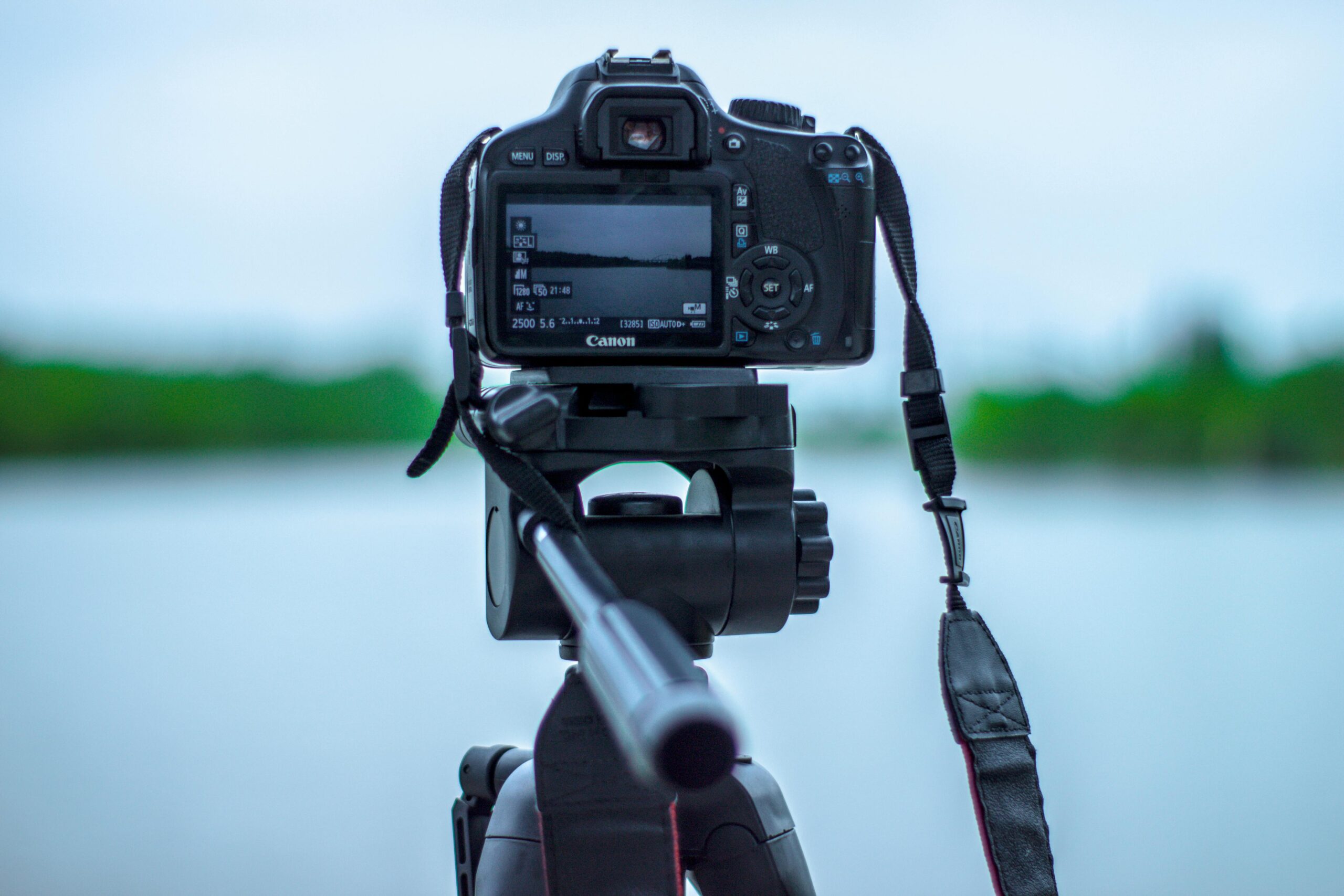
DSLRs represent the ideal starting point for most aspiring astrophotographers. The camera serves multiple purposes, has familiar operation, integrates easily with existing equipment, and produces satisfying results without overwhelming complexity. Modified DSLRs with enhanced hydrogen-alpha sensitivity bridge performance gaps at modest cost.
Dedicated astronomical cameras suit serious practitioners ready to commit to astrophotography as a primary hobby. Those imaging regularly, pursuing faint targets, creating competition-level images, or contributing to scientific projects find the specialized capabilities justify the investment and learning requirements.
Budget-conscious observers should maximize DSLR potential before upgrading. Modern DSLRs in skilled hands produce stunning images approaching dedicated camera quality, particularly for brighter showpiece objects. Master calibration, processing, and image acquisition fundamentals first—camera upgrades amplify existing skills rather than replacing them.
The Hybrid Approach and Future Developments
Some astrophotographers maintain both systems, using DSLRs for wide-field imaging and quick sessions while reserving dedicated cameras for challenging targets requiring maximum sensitivity. This approach maximizes flexibility while acknowledging each system’s strengths.
Recent developments blur traditional boundaries. Cooled color astronomical cameras combine DSLR workflow simplicity with astro camera thermal management. Certain Sony mirrorless cameras deliver impressive quantum efficiency and low read noise, closing performance gaps at consumer prices.
Back-illuminated sensor technology, improved thermal management in consumer cameras, and computational photography techniques continue advancing DSLR capabilities. Simultaneously, astronomical camera prices gradually decrease while features expand, making serious astrophotography increasingly accessible.
🌠 Making Your Decision With Confidence
The choice between DSLR and dedicated astronomical cameras ultimately depends on personal priorities, budget constraints, and commitment level. Neither option is universally superior—each excels in specific contexts and applications.
Start by honestly assessing your astrophotography goals. Casual imaging of bright targets while maintaining daytime photography capability strongly favors DSLRs. Serious pursuit of faint deep-sky objects with maximum detail justifies dedicated astronomical camera investment.
Consider your technical comfort level and learning appetite. DSLRs offer gentler learning curves with abundant tutorials and community support. Dedicated systems demand patience mastering complex workflows but reward effort with exceptional capabilities.
Remember that outstanding images emerge from skill, dedication, and proper technique far more than from equipment specifications alone. Master your current tools thoroughly before seeking hardware solutions to creative challenges. The best camera is ultimately the one you understand completely and use consistently under dark skies.
Whether you choose the versatile familiarity of a DSLR or the specialized power of a dedicated astronomical camera, both paths lead to the same destination: stunning images that capture the universe’s breathtaking beauty and inspire continued exploration of the cosmos above us. Your journey among the stars awaits—choose your tools wisely, but choose more importantly to begin.