Astrophotography opens a window to the universe, but sensor noise often clouds the view. Understanding and managing this technical challenge is essential for beginners seeking to capture stunning celestial images.

🌌 What Exactly Is Sensor Noise in Astrophotography?
When you point your camera toward the night sky, your sensor works overtime to collect precious photons from distant stars and galaxies. During this process, unwanted electrical signals inevitably contaminate your image data. This contamination is what photographers call sensor noise, and it manifests as random variations in brightness and color that weren’t present in the actual scene you photographed.
Unlike daytime photography where abundant light dominates, astrophotography operates in extreme low-light conditions. Your camera sensor must remain open for extended periods, sometimes minutes at a time, amplifying the signal to detect faint cosmic objects. Unfortunately, this amplification doesn’t discriminate between genuine light from celestial bodies and the random electrical interference generated within the sensor itself.
The resulting images often display a grainy texture, especially in the darker regions of your frame. These artifacts can obscure delicate nebula details, diminish star color accuracy, and reduce the overall professional quality of your astrophotography work. For beginners, this can be frustrating, but understanding the different types of noise represents your first step toward conquering this challenge.
The Three Primary Types of Sensor Noise You’ll Encounter
Read Noise: The Electronic Foundation
Read noise originates from the electronic circuitry that converts light captured by your sensor into digital information. Every time your camera reads the data from the sensor pixels, a small amount of random variation enters the signal. This occurs regardless of exposure duration or ISO setting, making it a constant baseline noise level present in every image you capture.
Modern cameras have dramatically reduced read noise through improved sensor technology and electronics design. High-end astrophotography cameras often advertise their low read noise specifications, typically measured in electrons. For practical purposes, read noise becomes most problematic when capturing very short exposures where the signal from dim objects hasn’t had time to accumulate sufficiently to overcome this electronic baseline.
Dark Current Noise: The Temperature Challenge
Your camera sensor generates heat during operation, and this thermal energy causes electrons to accumulate in the sensor pixels even when no light is present. This phenomenon, called dark current, increases exponentially with temperature and exposure time. During long astrophotography sessions, dark current can contribute significantly to your overall noise profile.
Dark current appears as a pattern of hot pixels scattered throughout your image, often showing up as bright red, green, or blue dots. In extreme cases with very long exposures or high temperatures, it creates an overall brightening of the image, stealing precious dynamic range from your actual astronomical data. This is why many serious astrophotographers invest in cooling systems or shoot during cooler months.
Shot Noise: The Photon Lottery
Shot noise represents the fundamental quantum nature of light itself. Photons from celestial objects arrive at your sensor randomly, following statistical distributions rather than uniform patterns. Even if you could eliminate all electronic noise sources, shot noise would remain because it’s inherent to the light collection process.
The brightness of shot noise relative to your signal follows a predictable mathematical relationship. Specifically, it increases with the square root of the signal. This means brighter areas of your image have more total shot noise but better signal-to-noise ratios. Conversely, the dark sky background, which contains fewer photons, suffers from poor signal-to-noise ratios, making it appear grainy even with perfect equipment.
🔧 How ISO Settings Influence Your Noise Levels
Beginning astrophotographers often misunderstand ISO, treating it as a mysterious setting that somehow creates more noise. In reality, ISO doesn’t amplify noise but rather amplifies both your astronomical signal and the existing noise together. The relationship between ISO and image quality in astrophotography differs significantly from general photography advice.
Lower ISOs don’t necessarily produce cleaner astrophotography images. At extremely low ISO settings, read noise dominates because your camera’s electronics haven’t amplified the weak signal from faint celestial objects enough to overcome this electronic baseline. Paradoxically, raising your ISO can actually improve signal-to-noise ratio up to a certain point called “unity gain.”
Unity gain represents the ISO setting where your camera’s amplification system most efficiently converts the analog signal from your sensor into digital data. For many modern cameras, this occurs between ISO 800 and ISO 1600. Operating at or near unity gain maximizes your use of the camera’s bit depth while minimizing the relative impact of read noise on your final image.
Beyond unity gain, further ISO increases don’t improve signal-to-noise ratio. They simply apply digital multiplication to your data, which you could accomplish in post-processing with identical results. However, shooting at higher ISOs provides a preview advantage, allowing you to evaluate composition and focus more easily on your camera’s LCD screen during field sessions.
Temperature Management: Your Secret Weapon Against Noise
Physics dictates that sensor noise has a strong temperature dependency, particularly dark current noise. For every temperature increase of approximately 6-8 degrees Celsius, dark current roughly doubles. This exponential relationship means that thermal management strategies can dramatically improve your astrophotography results, even with entry-level equipment.
Professional astrophotography cameras incorporate active cooling systems, using thermoelectric coolers to maintain sensor temperatures 30-40 degrees below ambient. While such specialized equipment costs thousands of dollars, beginners can achieve significant noise reduction through simpler approaches that don’t require major investments.
Shooting during cooler seasons, late at night, or at higher elevations naturally reduces ambient temperature. Allowing your camera to thermally stabilize for 20-30 minutes before beginning your imaging session prevents temperature-related drift in your dark current patterns. Some photographers use small fan attachments that blow air across the camera body, providing modest but measurable temperature reductions.
Avoiding unnecessarily long single exposures also limits thermal buildup. Instead of one ten-minute exposure, capturing twenty thirty-second exposures and stacking them produces less total noise because the sensor has less time to accumulate dark current between reads. This approach provides additional benefits, including better rejection of airplane trails and satellite passes during processing.
📸 Exposure Strategy: Finding Your Optimal Balance
Determining proper exposure duration involves balancing multiple competing factors. Longer exposures collect more photons from faint celestial objects, improving your signal. However, they also accumulate more dark current, increase the likelihood of tracking errors, and raise the risk of light pollution contamination washing out your sky background.
The concept of “exposing to the right” from daytime photography doesn’t translate directly to astrophotography. Instead, you should aim to expose so your sky background registers above the read noise floor but doesn’t approach saturation. For most light-polluted locations, this typically results in exposure times between 30 seconds and 3 minutes, depending on your equipment and target.
Modern astrophotography workflow emphasizes acquiring many shorter exposures rather than fewer long ones. This strategy, often called “stacking,” provides multiple advantages for noise reduction. Statistical algorithms can identify and reject random noise patterns while reinforcing consistent signal from astronomical objects. The more frames you stack, the more effectively these algorithms reduce noise.
As a starting guideline, aim to keep individual exposures short enough that light pollution doesn’t significantly brighten your histogram. Then compensate for the reduced signal by capturing enough frames to reach your desired total integration time. For example, 100 frames of 2 minutes each provides the same total light collection as 10 frames of 20 minutes, but with superior noise characteristics and artifact rejection.
The Power of Calibration Frames in Noise Reduction
Dark Frames: Mapping Your Sensor’s Signature ✨
Dark frames are exposures taken with your lens cap on, using the same exposure duration, ISO, and temperature as your light frames. These calibration images capture the pattern of dark current and hot pixels unique to your sensor. During processing, specialized software subtracts the dark frame from your light frames, effectively removing these predictable noise patterns.
Creating a library of dark frames represents one of the most powerful noise reduction techniques available to beginners. The process requires no special equipment beyond your existing camera. However, temperature sensitivity means your dark frames must match the thermal conditions of your actual imaging session. Many photographers create dark libraries at 5-degree intervals for their most commonly used exposure settings.
Bias Frames: Capturing Read Noise Patterns
Bias frames use your camera’s shortest possible shutter speed with the lens cap on, capturing only the read noise pattern without any dark current contribution. These frames help characterize the baseline electronic noise signature of your sensor. Because read noise doesn’t vary significantly with temperature, a single bias library can serve for extended periods.
Combining 50-100 bias frames through median stacking creates a master bias that accurately represents your sensor’s read noise pattern. This master bias gets subtracted from your light frames before other processing steps. While bias frames provide more modest improvements than dark frames, they’re quick to capture and help extract maximum detail from your astronomical data.
Flat Frames: Addressing Optical Vignetting
Though not strictly related to sensor noise, flat frames correct for uneven illumination caused by vignetting, dust shadows, and optical aberrations. These calibration images are captured by photographing a uniformly illuminated surface. When properly applied during processing, flat frames ensure that noise reduction algorithms work with accurate brightness information across your entire frame.
🖥️ Software Solutions for Post-Processing Noise Reduction
Modern astrophotography processing software incorporates sophisticated noise reduction algorithms that go far beyond simple blur filters. These specialized tools understand the characteristics of astronomical images, preserving fine stellar detail while aggressively smoothing noise in the sky background.
Stacking software like DeepSkyStacker, Siril, or PixInsight analyzes multiple frames of the same target, identifying consistent signal that appears in the same location across frames. Random noise, by definition, appears differently in each frame. Through statistical analysis, typically sigma-clipping algorithms, the software constructs a final image that reinforces signal while rejecting noise.
The effectiveness of stacking increases with frame count, but follows diminishing returns. Your first 10 frames provide dramatic improvement. Frames 10-30 offer substantial gains. Beyond 50-100 frames, noise continues decreasing but at a slower rate following the square root of the number of frames. Doubling your image quality requires quadrupling your total exposure time.
Additional specialized noise reduction techniques like wavelet processing allow selective smoothing of different spatial frequencies. You can aggressively reduce noise in areas without fine detail while preserving or even enhancing high-frequency information where stars and nebula structures reside. This targeted approach produces natural-looking results without the plastic, over-processed appearance of crude noise reduction.
Building Your Noise Reduction Workflow for Maximum Impact
Effective noise management begins before you press the shutter button. Planning your imaging session around favorable conditions—cool temperatures, dark sites, stable atmospheric seeing—provides better raw material than any post-processing technique can salvage from compromised data. Every photon you collect from your target and every degree you lower your sensor temperature makes subsequent processing more effective.
During your imaging session, maintain disciplined practices. Allow thermal stabilization time. Capture adequate calibration frames while your equipment maintains consistent temperature. Use live view focusing techniques to ensure precise focus, as slightly defocused images appear noisier because stellar light spreads across more pixels, reducing effective signal strength.
When processing your images, follow a logical sequence. Begin with calibration using your dark, bias, and flat frames. Stack your calibrated light frames using appropriate rejection algorithms. Only after stacking should you apply additional noise reduction, as premature noise reduction can interfere with proper frame alignment and stacking algorithms.
Resist the temptation to over-process your images. Excessive noise reduction destroys subtle detail and creates an artificial appearance. The goal isn’t eliminating every trace of noise but rather achieving a pleasing balance where authentic astronomical detail dominates while residual noise remains acceptably low. Comparing your work against experienced astrophotographers helps calibrate your aesthetic judgment.
🎯 Practical Tips for Immediate Noise Improvement
You can implement several noise reduction strategies immediately, regardless of your current equipment level. First, identify your camera’s unity gain ISO through online resources or testing. Shooting at this optimal ISO immediately improves your signal-to-noise ratio without spending a single dollar on new equipment.
Second, embrace shorter exposures and more frames. Rather than pushing for longer individual exposures, capture additional shorter ones. This approach reduces dark current accumulation, provides better data for outlier rejection, and often proves more practical given the limitations of budget tracking mounts.
Third, create calibration frame libraries for your most common shooting configurations. Invest one clear evening in capturing comprehensive dark and bias frame sets at your preferred ISO and exposure settings. These libraries will serve you for months, dramatically improving every subsequent astrophotography session.
Fourth, learn proper focusing techniques using live view magnification, Bahtinov masks, or focus assist software. Accurate focus concentrates stellar light onto fewer pixels, maximizing signal strength and minimizing the appearance of noise. Many beginners underestimate how significantly focus accuracy impacts perceived image quality.
Fifth, explore free or affordable processing software before investing in premium options. Tools like DeepSkyStacker and GIMP provide powerful noise reduction capabilities at zero cost. Master these accessible tools before deciding whether expensive alternatives offer sufficient additional value for your particular needs and budget.
Common Mistakes Beginners Make With Noise Management
New astrophotographers frequently use excessively high ISOs, misunderstanding optimal camera settings. While ISO 6400 might seem appropriate for capturing faint objects, it often surpasses unity gain without providing signal-to-noise improvement. This mistake reduces dynamic range and makes post-processing more challenging without actually improving your astronomical data quality.
Another common error involves applying heavy-handed noise reduction too early in the processing workflow. Aggressive noise reduction before proper stretching and calibration destroys subtle signal that could have been recovered with more refined techniques. Noise reduction should generally be among the final processing steps, after you’ve extracted maximum information through calibration and stacking.
Many beginners neglect calibration frames entirely, viewing them as optional refinements rather than fundamental requirements. This mistake significantly compromises final image quality, as uncalibrated images retain sensor patterns that processing interprets as signal rather than noise. The relatively small time investment in capturing calibration frames returns substantial quality improvements.
Insufficient total integration time represents perhaps the most fundamental mistake. Beginners often expect single short exposures to reveal faint celestial objects that actually require hours of cumulative exposure time. No amount of processing can compensate for inadequate light collection. Building substantial frame counts requires patience but remains non-negotiable for quality astrophotography results.
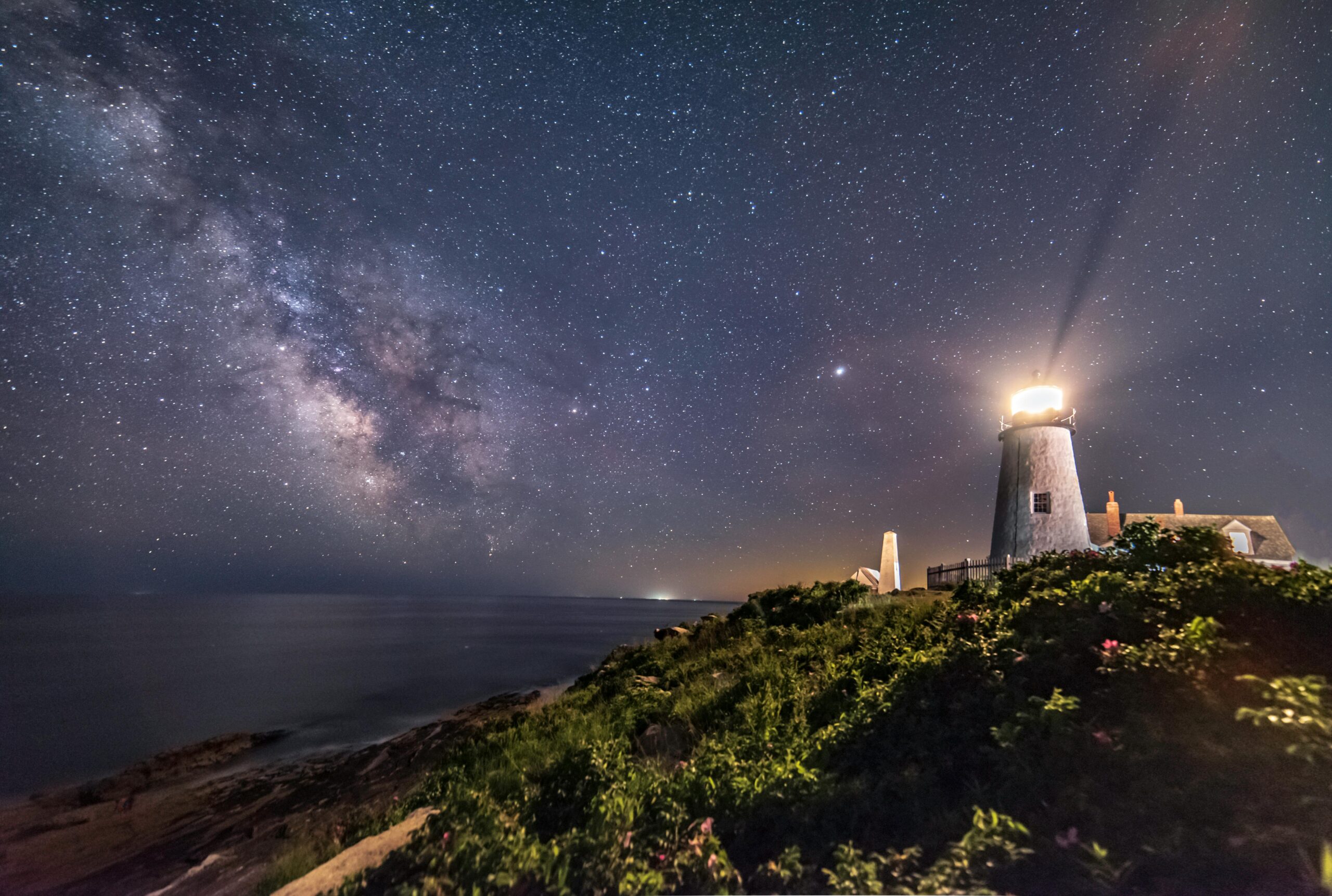
Your Journey Toward Cleaner Cosmic Captures 🌠
Mastering sensor noise management transforms astrophotography from frustrating guesswork into predictable, rewarding practice. As you implement these techniques, you’ll notice progressive improvement in your images. Stars will appear crisper against smoother backgrounds. Faint nebulosity will emerge from what previously seemed like empty darkness. Color gradients will display subtle nuance rather than blotchy noise patterns.
Remember that even professional astrophotographers work within noise constraints. The difference lies not in eliminating noise entirely but in managing it effectively through proper technique and processing. Every improvement in your workflow compounds with others, creating results that far exceed what individual techniques achieve in isolation.
Continue learning and experimenting with different approaches. The astrophotography community generously shares knowledge through forums, social media groups, and tutorials. Don’t hesitate to share your work and ask questions. Most experienced practitioners remember their own beginnings and eagerly help newcomers navigate these technical challenges.
Your growth as an astrophotographer depends less on expensive equipment than on understanding fundamental principles like noise management. Photographers with modest gear but solid technique consistently produce superior results compared to those with premium equipment but poor practices. Focus on mastering these foundational concepts, and your images will reflect that expertise regardless of your budget constraints.
The universe awaits your lens, and with proper noise management strategies, you’re now equipped to capture its beauty with increasing clarity and confidence. Clear skies and clean sensors!