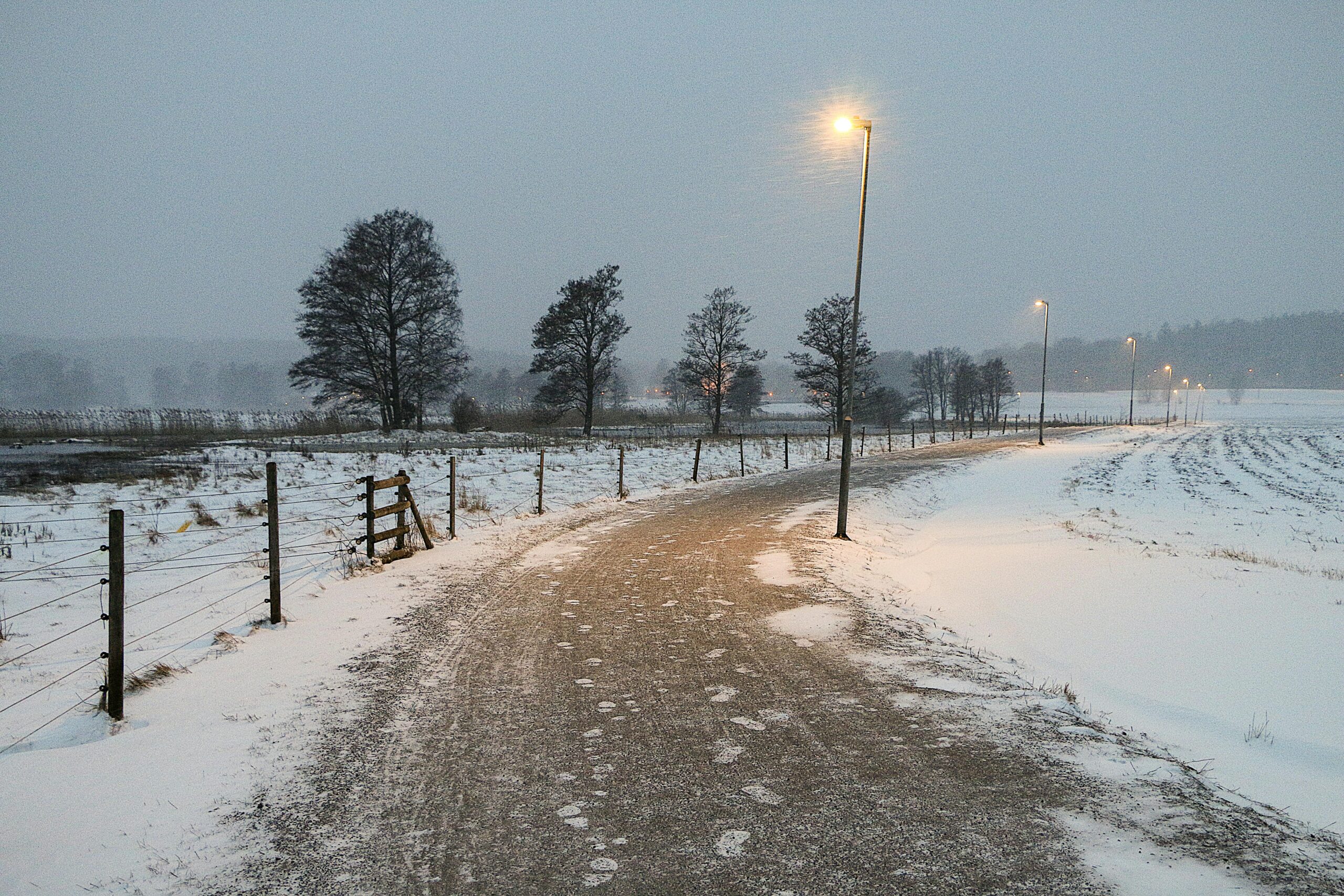
Long exposure photography transforms ordinary scenes into ethereal masterpieces, but thermal noise threatens to ruin every frame. Cooling technology has revolutionized this art form.

🌡️ Understanding the Heat Behind the Noise
When your camera sensor captures light over extended periods, it generates heat. This thermal energy isn’t just a physics curiosity—it’s the enemy of clean, professional images. As electrons move through the sensor’s silicon substrate, they create thermal agitation that manifests as random pixels of varying brightness across your image. Photographers call this phenomenon “thermal noise,” and it becomes exponentially worse as exposure times increase beyond thirty seconds.
The relationship between temperature and noise isn’t linear. For every 6-8 degrees Celsius increase in sensor temperature, noise approximately doubles. This exponential growth means that a sensor operating at 40°C produces dramatically more noise than one at 20°C. During a five-minute exposure on a warm summer night, your sensor can heat up significantly, turning what should be a smooth night sky into a constellation of unwanted colored pixels.
Professional astrophotographers have known this secret for decades: cooling the sensor is the single most effective way to achieve noise-free long exposures. While software can reduce some noise through algorithms, nothing beats preventing it at the source through active thermal management.
The Physics of Sensor Cooling Technology
Modern sensor cooling employs sophisticated thermoelectric technology, primarily using Peltier devices. These solid-state heat pumps transfer thermal energy from one side of the device to another when electrical current flows through them. By mounting a Peltier cooler directly behind the camera sensor, manufacturers can reduce its operating temperature by 30-40 degrees Celsius below ambient temperature.
The cooling process works through the Seebeck-Peltier effect, discovered in the 19th century but perfected for imaging applications only in recent decades. When current passes through the junction of two different semiconductors, one side absorbs heat while the other releases it. The challenge lies in efficiently dissipating the heat from the hot side, which requires substantial heatsinks and sometimes active fan cooling.
High-end astronomical cameras achieve sensor temperatures as low as -40°C, though most practical photography applications target -10°C to -20°C below ambient. This cooling range provides the sweet spot between noise reduction and power consumption, allowing portable setups without requiring heavy battery systems.
🔧 Types of Cooling Systems for Photography
Different photography applications demand different cooling approaches. Understanding these systems helps photographers choose the right equipment for their specific needs.
Active Thermoelectric Cooling
Active cooling systems use Peltier devices powered by external electricity sources. These systems offer the most aggressive temperature reduction and are standard in dedicated astronomy cameras. The cooler actively removes heat from the sensor and expels it through heatsinks or liquid cooling loops. While highly effective, these systems require consistent power and add considerable weight to camera setups.
The advantage of active cooling becomes apparent during extended imaging sessions. A properly cooled sensor maintains consistent temperature throughout multi-hour exposures, ensuring that early and late frames show identical noise characteristics. This consistency proves invaluable when stacking multiple exposures for astrophotography or time-lapse projects.
Passive Cooling Solutions
Passive cooling relies on thermal mass and convection rather than active heat pumping. Some camera manufacturers integrate copper or aluminum heatsinks directly connected to the sensor assembly, allowing ambient air to naturally dissipate heat. While less dramatic than active systems, passive cooling still reduces sensor temperature by 5-15 degrees Celsius.
For photographers who prioritize portability and simplicity, passive systems offer meaningful noise reduction without power requirements or mechanical complexity. Modern mirrorless cameras with magnesium bodies naturally provide some passive cooling through their chassis, though dedicated systems perform significantly better.
Hybrid Approaches
Cutting-edge camera designs combine passive thermal management with optional active cooling modules. These hybrid systems operate efficiently in moderate conditions using passive dissipation, then engage active cooling for demanding situations. This flexibility appeals to photographers who work across diverse environments and shooting conditions.
Real-World Benefits for Different Photography Genres 📸
Cooling technology isn’t just for astrophotographers, though they benefit most dramatically. Multiple photography disciplines gain significant advantages from reduced thermal noise.
Astrophotography and Night Sky Imaging
Deep-sky imaging absolutely requires cooled sensors for professional results. When exposing for nebulae, galaxies, and star clusters over minutes or hours, thermal noise without cooling would completely overwhelm faint astronomical signals. Cooled cameras reveal subtle details in emission nebulae and resolve faint stellar populations that warm sensors simply cannot capture.
The difference becomes immediately visible when comparing cooled versus uncooled images. Uncooled 5-minute exposures show significant noise grain and color mottling, requiring aggressive noise reduction that destroys fine detail. Cooled sensors produce clean backgrounds that preserve delicate nebular structure and faint star colors.
Landscape Night Photography
Landscape photographers shooting twilight, blue hour, or Milky Way compositions benefit enormously from cooling. Those beautiful 30-second to 4-minute exposures of foreground landscapes under starry skies depend on clean shadows and smooth gradients. Thermal noise creates ugly artifacts in the dark sky portions and shadow regions of landscape elements.
Professional landscape photographers increasingly adopt cooled cameras or employ cooling strategies because clients expect perfectly clean files. A noisy sky detracts from the entire composition, and aggressive noise reduction in post-processing creates unnatural-looking star softness and color shifts.
Time-Lapse Sequences
Time-lapse photography compounds the thermal noise problem because inconsistency between frames creates flickering artifacts in the final video. As cameras warm up during long shooting sessions, thermal noise patterns change, causing distracting variations in image brightness and texture.
Cooled sensors maintain temperature stability, ensuring every frame in a 500-image time-lapse sequence matches perfectly. This consistency eliminates deflickering work in post-production and produces professional-quality results straight from the camera.
⚡ Power Consumption and Battery Considerations
Active cooling systems demand significant electrical power, typically consuming 3-8 watts continuously during operation. This power requirement sounds modest but accumulates substantially during multi-hour shooting sessions. Photographers must plan battery capacity accordingly.
A typical cooled astronomy camera drawing 5 watts requires approximately 5 amp-hours from a 12-volt power source for one hour of operation. Extended deep-sky imaging sessions spanning 6-8 hours therefore need 30-40 amp-hours of battery capacity, accounting for inefficiencies in voltage conversion.
Modern lithium battery technology makes portable cooled imaging practical. High-capacity LiFePO4 batteries provide stable voltage throughout discharge cycles and handle repeated deep discharge better than traditional lead-acid batteries. Serious astrophotographers invest in battery systems capable of powering cameras, mount motors, dew heaters, and cooling systems simultaneously throughout entire nights.
Temperature Regulation and Dew Point Management 💧
Cooling sensors below ambient temperature creates a new challenge: condensation. When sensor temperature drops below the local dew point, moisture from the air condenses directly on the sensor surface, potentially causing permanent damage or at minimum ruining images until the moisture evaporates.
Professional cooled cameras incorporate sealed sensor chambers with desiccant materials that absorb moisture. These chambers isolate the sensor from ambient air, allowing aggressive cooling without condensation risk. The sealed design also prevents dust accumulation on the sensor during long exposures.
Some advanced systems include humidity sensors and temperature controllers that prevent cooling below safe thresholds. These intelligent systems monitor ambient conditions and automatically adjust cooling power to maintain optimal sensor temperature while avoiding condensation formation.
📊 Measuring the Impact: Before and After Analysis
Quantifying cooling benefits requires understanding sensor noise metrics. Dark current, measured in electrons per pixel per second, directly indicates thermal noise generation rates. Cooled sensors show dramatically reduced dark current compared to uncooled equivalents.
| Sensor Temperature | Dark Current (e-/pixel/second) | Relative Noise Level |
|---|---|---|
| +20°C (uncooled) | 0.8 | Baseline (1.0x) |
| 0°C (moderate cooling) | 0.2 | 0.25x |
| -20°C (aggressive cooling) | 0.02 | 0.025x |
This table demonstrates the exponential relationship between temperature and noise. Reducing sensor temperature by 40 degrees Celsius decreases dark current by roughly 40 times, transforming image quality dramatically.
Professional photographers evaluate cooling effectiveness through signal-to-noise ratio (SNR) measurements. Higher SNR indicates cleaner images with better separation between actual signal and background noise. Cooled sensors routinely achieve SNR improvements of 3-5x compared to uncooled sensors during long exposures, translating directly to better final image quality.
🛠️ Practical Implementation Strategies
Photographers interested in cooling technology face several implementation options depending on budget, portability requirements, and shooting style.
Dedicated Cooled Astronomy Cameras
Purpose-built astronomy cameras from manufacturers like ZWO, QHY, and Atik integrate sophisticated cooling systems designed specifically for long-exposure imaging. These cameras prioritize cooling efficiency over features like high frame rates or video capabilities. Prices range from $800 for entry-level models to $10,000+ for large-format research-grade cameras.
These specialized cameras excel at their intended purpose but lack the versatility of regular cameras. They typically require computers for operation, making them less suitable for casual photography. However, for serious astrophotography, they represent the gold standard in noise-free imaging.
Modified DSLR and Mirrorless Cameras
Some companies offer cooling modifications for popular camera bodies. These modifications add external or internal cooling systems to standard cameras, preserving normal camera functionality while adding thermal management. This approach suits photographers who want cooling benefits without abandoning familiar camera systems.
Modified cameras maintain compatibility with existing lenses and accessories while dramatically improving long-exposure performance. The modification process typically costs $500-$1500 depending on complexity, making it more accessible than purchasing dedicated astronomy cameras.
External Cooling Accessories
For photographers seeking simpler solutions, external cooling accessories attach to camera bodies to provide passive or semi-active cooling. These accessories range from simple thermal pads that conduct heat away from the camera body to sophisticated external coolers with fans and Peltier elements.
While less effective than integrated systems, external coolers still provide meaningful noise reduction for minimal investment. They work particularly well for photographers who occasionally need better long-exposure performance but don’t require professional astrophotography capabilities.
Future Developments in Sensor Cooling Technology 🚀
Sensor cooling technology continues evolving rapidly as manufacturers develop more efficient systems. Several emerging technologies promise even better performance in coming years.
Micro-refrigeration systems using miniaturized vapor compression cycles could provide more efficient cooling than current Peltier devices. These systems would consume less power while achieving lower temperatures, making aggressive cooling practical in portable camera bodies.
Advanced materials like graphene heat spreaders promise to improve passive cooling dramatically. Graphene conducts heat hundreds of times better than copper, potentially allowing passive systems to approach current active cooling performance without power consumption or mechanical complexity.
Computational approaches complement physical cooling. Machine learning algorithms trained on cooled sensor data can predict and remove thermal noise patterns from uncooled images with increasing accuracy. While never as effective as preventing noise at the source, these algorithms expand the benefits of cooling technology to photographers using standard equipment.
Making the Investment Decision: Is Cooling Worth It? 💰
Whether cooling technology makes sense depends entirely on your photography goals and shooting frequency. Casual photographers taking occasional long exposures probably don’t need dedicated cooling systems. Modern post-processing software handles moderate thermal noise adequately for most purposes.
Serious astrophotographers and night photography specialists benefit enormously from cooling. The image quality improvement justifies the investment when producing portfolio-quality work or commercial deliverables. The ability to capture clean, noise-free images in-camera saves countless hours of post-processing work and produces superior final results.
Photographers should honestly assess how frequently they shoot long exposures exceeding one minute. If such shooting comprises a significant portion of your work, cooling becomes increasingly attractive. For occasional long-exposure work, investing in better post-processing skills and software might provide better value.
Budget considerations obviously matter. Entry-level cooling solutions start around $500, while professional systems easily exceed $5000. Photographers should balance this investment against other equipment needs like lenses, mounts, and accessories. Sometimes a better lens or sturdier tripod improves overall image quality more than adding sensor cooling.

🌟 The Silent Revolution in Long-Exposure Imaging
Sensor cooling represents a fundamental shift in how photographers approach long-exposure work. What once required extensive post-processing, image stacking, and noise reduction now happens automatically through physical temperature management. This shift frees photographers to focus on composition, timing, and artistic vision rather than technical noise mitigation.
The technology has democratized high-quality astrophotography, making professional results accessible to dedicated amateurs willing to invest in proper equipment. Images that once required thousand-dollar software packages and expert processing skills now emerge cleanly from cooled cameras with minimal post-processing.
As cooling systems become more efficient, compact, and affordable, they’ll likely integrate into mainstream camera bodies. We may see future flagship cameras incorporating mild cooling as standard features, just as image stabilization and phase-detection autofocus became universal. This integration would benefit all photographers, not just specialists, raising the baseline for what constitutes acceptable image quality.
The magic of cooling lies not in complex algorithms or clever post-processing tricks, but in addressing thermal noise at its source. By keeping sensors cool during long exposures, photographers capture cleaner data from the start, preserving subtle details and tonal gradations that noise would otherwise obscure. This fundamental approach—preventing problems rather than fixing them afterward—represents the best practice in any technical field, and photography proves no exception.
Whether you’re imaging distant galaxies, capturing flowing water under moonlight, or creating artistic light-trail compositions, sensor cooling offers a pathway to cleaner, more professional results. The silent shutter clicks, the exposure counter ticks upward, and beneath it all, sophisticated cooling technology works its magic—preserving every photon of light while suppressing the thermal noise that once plagued long-exposure photography. For photographers serious about pushing the boundaries of low-light imaging, cooling technology isn’t just a luxury; it’s becoming an essential tool in the modern imaging arsenal.