Field rotation and stacking techniques are essential skills for achieving professional-grade astrophotography results, transforming ordinary night sky captures into breathtaking celestial masterpieces.

🌌 Understanding the Fundamentals of Field Rotation
Field rotation occurs when capturing long-exposure images of the night sky without proper polar alignment. As Earth rotates on its axis, celestial objects appear to move across the sky in circular arcs centered on the celestial poles. This movement becomes particularly problematic for astrophotographers using alt-azimuth mounts or attempting deep-sky imaging without perfect polar alignment.
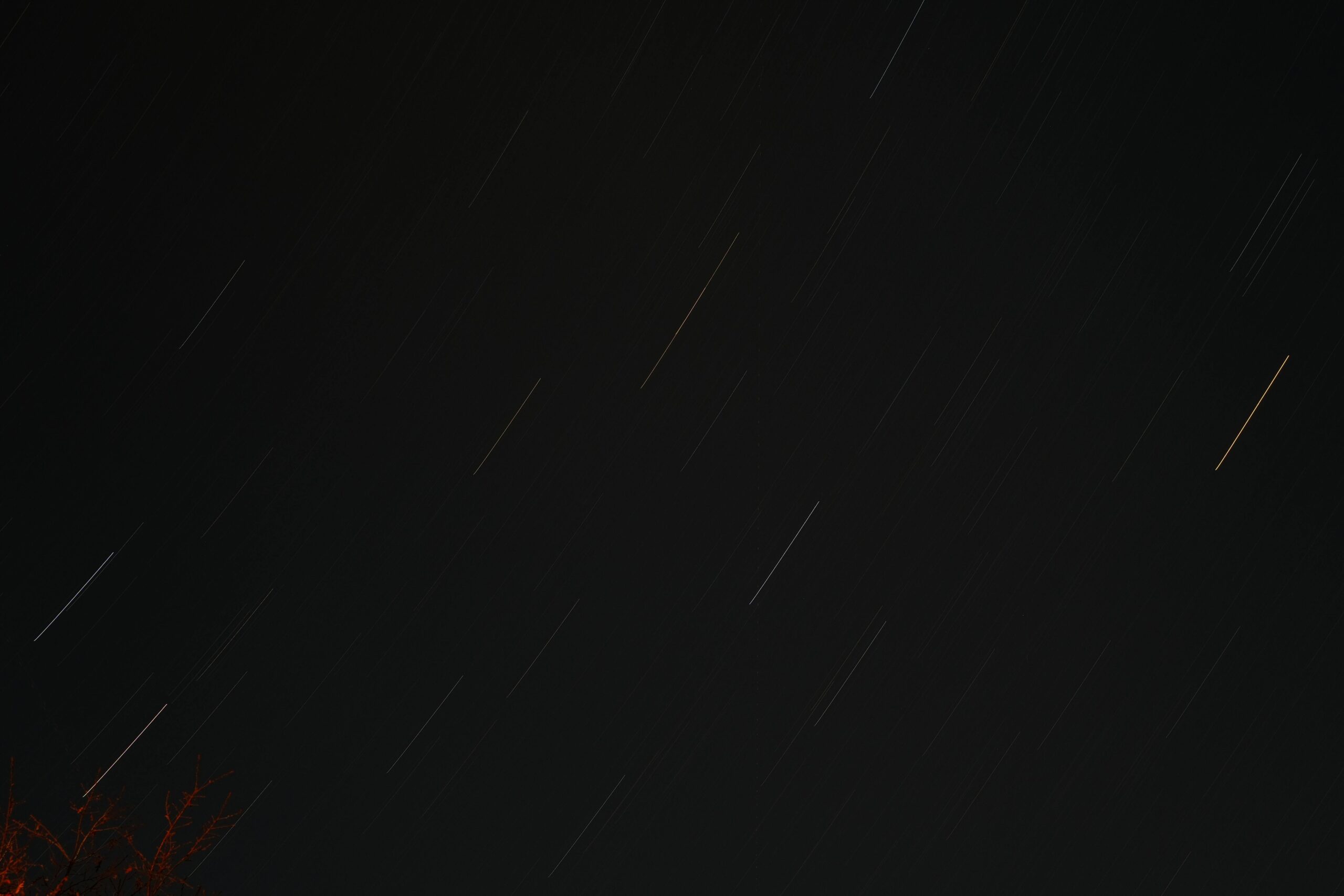
The phenomenon manifests as stars appearing to rotate around a central point in your frame, creating arc-shaped trails rather than pinpoint stars. While this effect can be artistic in certain contexts, it presents significant challenges when attempting to stack multiple exposures for deep-sky astrophotography.
Understanding field rotation begins with recognizing that different parts of your image frame rotate at different rates. Stars near the celestial pole experience minimal rotation, while objects further from the pole exhibit increasingly pronounced rotation as exposure time increases. This differential rotation creates alignment challenges that standard stacking algorithms struggle to compensate for effectively.
The Physics Behind Celestial Movement
Earth completes one full rotation every 23 hours and 56 minutes, meaning celestial objects drift approximately 15 degrees per hour across our sky. For wide-field photography, this movement becomes noticeable within seconds. For narrower fields of view using telephoto lenses or telescopes, even brief exposures can show rotation effects when equipment isn’t properly aligned.
The rate of field rotation depends on several factors including your geographic latitude, the declination of your target, and your mount’s alignment accuracy. Equatorial regions experience different rotation rates compared to polar regions, making understanding your specific observing conditions crucial for planning imaging sessions.
📸 Essential Equipment for Managing Field Rotation
Successfully managing field rotation requires understanding both hardware and software solutions. Your equipment choices significantly impact how you’ll need to approach stacking rotated fields.
Mount Types and Their Impact
Equatorial mounts are specifically designed to track celestial motion by rotating around an axis parallel to Earth’s rotational axis. When properly polar aligned, these mounts effectively eliminate field rotation, making them the preferred choice for serious astrophotographers. German equatorial mounts, fork mounts, and equatorial platforms all serve this purpose with varying degrees of portability and weight capacity.
Alt-azimuth mounts move in altitude and azimuth axes, which don’t align with celestial coordinates. While simpler and often more affordable, these mounts introduce field rotation that becomes increasingly problematic with longer exposures or narrower fields of view. Many computerized alt-az mounts can partially compensate using field derotators, but these add complexity and cost.
Tracking camera mounts and star trackers represent a middle ground, offering portability while enabling tracking for wide-field astrophotography. Models like the Sky-Watcher Star Adventurer, iOptron SkyGuider Pro, and Move Shoot Move trackers provide excellent solutions for photographers transitioning from fixed tripod shooting to tracked imaging.
Camera and Lens Considerations
Your imaging equipment influences how field rotation affects your results. Wider focal lengths show less pronounced rotation effects per unit area, allowing longer individual exposures before rotation becomes problematic. Telephoto lenses and telescopes magnify rotation effects, requiring either perfect tracking or sophisticated post-processing techniques.
Full-frame sensors capture larger fields than crop sensors at equivalent focal lengths, which can work both for and against you. The larger field provides more data for alignment algorithms but also captures more differential rotation across the frame.
🔄 Advanced Stacking Techniques for Rotated Fields
When field rotation is unavoidable or you’re working with existing data that exhibits rotation, specialized stacking techniques become essential for salvaging your images.
Multi-Point Alignment Strategies
Traditional stacking algorithms align images using translation and rotation applied uniformly across the entire frame. This approach fails with field rotation because different regions require different rotational corrections. Multi-point alignment divides your frame into sections, calculating separate transformations for each region.
Software like PixInsight’s ImageIntegration module, Astro Pixel Processor, and DeepSkyStacker offer advanced alignment options that can handle moderate field rotation. These programs identify star positions across multiple sub-frames and calculate complex transformations that warp images to align corresponding stars, even when those stars have rotated differently across the frame.
The key to successful multi-point alignment is providing the software with sufficient reference points. Images with rich star fields yield better alignment results than sparse fields. Target selection matters—dense Milky Way regions or star clusters provide abundant alignment references compared to darker nebula regions with fewer stars.
The Drizzle Integration Method
Drizzle algorithms, originally developed for Hubble Space Telescope data processing, excel at combining undersampled or geometrically distorted images. When applied to astrophotography with field rotation, drizzle integration can produce remarkably sharp results by carefully mapping pixel data from source images onto a higher-resolution output frame.
This technique requires computational power and processing time but rewards patience with improved resolution and reduced artifacts from rotation. The drizzle factor determines how much upscaling occurs—conservative factors like 1.5x or 2x often produce better results than aggressive scaling that can amplify noise.
⚙️ Software Solutions for Perfect Stacking
Modern astrophotography software has evolved sophisticated algorithms specifically addressing field rotation challenges. Understanding the strengths of different programs helps you choose the right tool for your workflow.
PixInsight for Professional Results
PixInsight remains the gold standard for serious astrophotographers dealing with challenging data. Its StarAlignment and ImageIntegration processes offer unparalleled control over alignment parameters. The distortion correction options can compensate for field rotation, optical aberrations, and atmospheric refraction simultaneously.
The learning curve is steep, but the results justify the investment. PixInsight’s script-based workflow allows automating complex processing chains, making it invaluable for processing large datasets or repeated imaging sessions of similar targets.
Sequator for Accessible Field Rotation Handling
Sequator has gained popularity for its user-friendly interface combined with sophisticated alignment capabilities. This free Windows application automatically detects and compensates for various alignment challenges including field rotation, making it accessible to intermediate astrophotographers.
The software’s automatic detection of sky regions versus landscape elements makes it particularly valuable for nightscape photography where you’re combining tracked sky with stationary foreground. The field rotation compensation works well for moderate rotation amounts typical of tracked wide-field imaging.
Astro Pixel Processor’s Comprehensive Approach
Astro Pixel Processor (APP) combines powerful alignment algorithms with an intuitive workflow that guides users through the stacking process. Its automatic analysis detects field rotation and applies appropriate corrections without requiring manual intervention in most cases.
APP’s strength lies in batch processing capabilities and intelligent defaults that produce excellent results while remaining accessible to users without extensive image processing backgrounds. The software handles everything from DSLR images to dedicated astronomy camera formats, making it versatile for various equipment configurations.
🎯 Practical Workflow for Rotated Field Stacking
Implementing an effective workflow transforms field rotation from an insurmountable obstacle into a manageable challenge. Following systematic steps ensures consistent results regardless of your specific equipment and software choices.
Pre-Processing and Image Selection
Begin by calibrating your light frames with appropriate dark, flat, and bias frames. Proper calibration removes sensor-specific artifacts that could confuse alignment algorithms. Many field rotation problems become exponentially worse when working with poorly calibrated data.
Critically evaluate each sub-frame before stacking. Images with tracking errors, clouds, airplane trails, or focusing problems should be rejected regardless of field rotation. Including poor-quality frames degrades your final result more significantly when dealing with complex alignment challenges.
Star sharpness metrics help identify the best frames. Most stacking software can automatically rank images by star quality, allowing you to select only the sharpest exposures. When facing field rotation, working with fewer high-quality frames often produces better results than including all available data.
Alignment Parameter Optimization
Selecting appropriate alignment references dramatically affects results. Choose bright, isolated stars well-distributed across your frame as alignment points. Avoid selecting stars near frame edges where distortion and rotation effects are most pronounced.
Configure your stacking software to use perspective or polynomial transformations rather than simple translation and rotation. These advanced transformation modes account for the complex geometric distortions characteristic of field rotation.
Experiment with different star detection thresholds. Too sensitive, and the algorithm includes noise or hot pixels as false stars. Too conservative, and insufficient reference points compromise alignment accuracy. Most software provides preview modes showing detected stars—verify these look correct before proceeding.
Integration and Quality Assessment
During the integration phase, appropriate rejection algorithms eliminate outlier pixels from cosmic ray strikes, satellites, and airplanes. Sigma clipping methods work well for most situations, with percentile clipping offering more aggressive rejection when needed.
Pay attention to rejection maps if your software provides them. These visualizations show which pixels were rejected from how many frames, helping identify systematic problems. Heavy rejection in specific regions might indicate alignment failures or other issues requiring attention.
After integration, examine your stacked result at 100% magnification in multiple frame regions. Stars should appear round and sharp throughout the frame. Elongated or distorted stars indicate residual alignment problems requiring adjusted processing parameters.
🔍 Troubleshooting Common Field Rotation Problems
Even with optimal equipment and software, field rotation challenges sometimes resist straightforward solutions. Recognizing common problems and their fixes saves hours of frustration.
Differential Star Elongation
When stars appear round in frame center but increasingly elongated toward edges, you’re seeing classic field rotation signatures. If elongation follows concentric arc patterns around a specific point, this confirms rotation around that celestial pole position.
Solutions include cropping to the well-aligned central region, using more sophisticated alignment algorithms, or reprocessing with different transformation modes. Sometimes simply reducing the number of stacked frames decreases total rotation, allowing better alignment of the remaining images.
Pattern Noise and Artifacts
Repeating patterns or strange textures in stacked images often result from alignment failures causing the same pixels to combine incorrectly across multiple frames. This becomes particularly visible in smooth nebula regions or sky background areas.
Addressing these artifacts requires revisiting alignment settings, potentially changing reference star selections, or trying alternative stacking software. Sometimes the problem stems from insufficient dithering between exposures—if available, slight intentional position shifts between frames help average out systematic errors.
Gradient and Color Issues
Field rotation can interact with light pollution gradients and atmospheric dispersion, creating uneven color or brightness across your stacked result. These issues require targeted correction during post-processing using gradient removal tools and selective color balancing.
Advanced techniques involve creating artificial flat frames from the stacked image itself, modeling the gradient and applying corrections. This approach works well when traditional flat field calibration proves insufficient for rotation-complicated data.
🚀 Advanced Techniques for Perfect Results
Mastering field rotation opens doors to advanced imaging techniques that maximize your equipment’s potential regardless of mount limitations.
Lucky Imaging with Rotated Fields
Lucky imaging traditionally involves capturing many short exposures and selecting only the sharpest for stacking. This technique combats atmospheric turbulence but works equally well for field rotation situations. Very short exposures minimize rotation per frame, while stacking many exposures accumulates signal.
The trade-off involves shooting hundreds or thousands of frames to accumulate equivalent exposure time. Modern cameras’ high ISO performance makes this practical, and automated workflows handle the processing burden. Results can rival tracked exposures when conditions cooperate.
Mosaic Imaging Strategies
Creating mosaics adds complexity when field rotation is present because each panel rotates around its own center point. Successful mosaic imaging requires either eliminating rotation through proper tracking or carefully managing rotation in each panel independently before combining them.
Processing workflows for rotated field mosaics involve stacking each panel separately with rotation-aware algorithms, then combining the processed panels using mosaic software that accounts for the different orientations. Planning panel overlaps generously provides sufficient matching features for alignment algorithms.
💡 Optimizing Your Imaging Strategy
Long-term success with field rotation management comes from strategic planning that minimizes challenges before they occur while maintaining flexibility for opportunistic imaging.
Target Selection for Untracked Imaging
Certain celestial targets tolerate field rotation better than others. Objects near celestial poles experience minimal rotation, making them ideal for alt-azimuth mounts or imperfect polar alignment. Conversely, equatorial targets rotate significantly, demanding either tracking or very short exposures.
Consider apparent motion rates when planning exposure times. The 500 rule (500 divided by focal length in mm equals maximum exposure seconds for sharp stars) provides a starting point, but accounting for declination and mount quality requires adjusting this guideline based on testing results.
Seasonal and Location Planning
Your observing latitude affects field rotation characteristics. Polar regions see circumpolar objects with minimal rotation, while equatorial latitudes experience more uniform rotation across the sky. Understanding these patterns helps optimize imaging strategies for your location.
Seasonal considerations matter too—target altitude affects both atmospheric distortion and rotation rate. Objects at zenith rotate most slowly, making them ideal candidates when field rotation is a concern. Planning your imaging sessions around optimal target positions maximizes success rates.
🎓 Continuous Improvement and Learning
Field rotation mastery develops through practice, experimentation, and learning from both successes and failures. Building a systematic approach to testing and evaluation accelerates skill development.
Document your imaging sessions comprehensively, noting equipment configurations, targets, exposure parameters, and processing approaches. This database becomes invaluable for identifying patterns in what works well versus what struggles. Over time, you’ll develop intuition for appropriate techniques for specific situations.
Join astrophotography communities where experienced imagers share techniques and troubleshoot challenges. Online forums, social media groups, and local astronomy clubs provide opportunities to learn from others’ experiences and receive feedback on your work. The collective knowledge of these communities addresses edge cases and unusual situations individual experimentation might never encounter.
Experiment deliberately with one variable at a time rather than changing everything simultaneously. This scientific approach clearly demonstrates which factors improve results versus which make little difference. Build your processing skills progressively, mastering fundamental techniques before attempting advanced methods.
Regular equipment maintenance and testing prevents field rotation problems from compounding other issues. Verify polar alignment accuracy, monitor tracking performance, and test new equipment thoroughly before important imaging sessions. Preventive attention saves frustration when working with challenging targets.
Embrace field rotation as an opportunity rather than merely a problem to solve. Understanding these techniques deeply makes you a more capable and versatile astrophotographer, able to produce excellent results across diverse equipment and conditions. The skills developed managing rotation transfer directly to other imaging challenges, building comprehensive expertise that elevates all your astronomical imaging endeavors. 🌟